 Domain RegistrationFind and register the perfect domain for your website.
 .COM DomainChoose a widely recognized domain to build global credibility.
 Domain TransferSeamless domain transfers with zero downtime and complete control.
 All TLDsFind and register your perfect domain. Choose from local and global extensions.
 SSL CertificatesKeep your website safe with reliable SSL Certificates that protect customer data and build trust.
 whoisCheck domain ownership details, expiration dates, and registrar information.
 US DomainRegister a .US domain and build trust in the USA.
 Web HostingEverything your website needs to run smoothly
 WordPress HostingWordPress hosting that just works
 Windows HostingReliable hosting for Windows environments
 Reseller HostingTurn hosting into your business
 Email HostingEmail that looks professional and works anywhere
 cPanel HostingFull control of your hosting with cPanel
 Affiliate ProgramJoin as a partner and earn commissions on every referral you send our way.
 Vps HostingScalable virtual servers that expand as you need.
 Dedicated ServersGet complete access and full control over your dedicated physical server.
 Managed vpsNot tech-savvy? We will take care of everything with our fully managed VPS hosting for you.
 AI Website BuilderCreate stunning websites in seconds with AI.
 Online ShopSet up a professional online store. No coding required.
 Web design serviceGet a tailored website designed to match your brand and support your goals.
 BlogFind helpful guides on web hosting, online selling, digital marketing, and more.
 Contact USYou can reach us anytime, day or night, through chat or email.
 SupportBrowse helpful guides and answers for all of our services.
You finally land on a business name that feels right. Something you can actually build around.
The next step? Getting a domain name. And naturally, you are thinking of a .com. It is familiar, trusted, and still the first thing most people try.
But here is where things get tricky, that perfect .com is often already taken. Or it is listed somewhere at a price that just does not make sense for where you are right now.
And it does not stop there. The search drags on. You try different variations, rethink your options, and start wondering if you are overcomplicating something that should be simple.
The truth is, your domain matters more than you think. It is often the first thing people see, and the extension you choose quietly shapes how your brand comes across.
So why does .com still hold that strong position in 2026? And how do you get one without the stress or confusion?
That is exactly what we are going to break down in this guide
What is a .com Domain?
A .com domain is a web address that ends with .com, short for commercial. It was introduced in 1985 as one of the first domain extensions on the internet, originally meant for businesses.
That was over forty years ago. Since then, it has grown into something much bigger than its original purpose. Personal brands, bloggers, creators, and startups all use it today.
It is not just a technical label at the end of a URL. For most people browsing the internet, .com is what a real website looks like. That perception has been built over decades, and it still holds strong today.
Quick Facts About .com Domains
The .com extension has been around since January 1, 1985. It is managed by a company called Verisign and stands for commercial, though anyone can register one. There are no restrictions on who qualifies.
Over 160 million .com domains are registered worldwide, making it the most used domain extension on the internet by a wide margin. Registration typically costs between $10 and $15 per year. You can register a domain for as little as one year or as long as ten, and transfers between registrars are allowed if you ever want to move.
Why Choose .com
- It Carries Trust That Has Been Earned Over Time A .com feels familiar and reliable because people have seen it for years. It builds instant confidence without needing explanation.
- It Works Everywhere A .com is globally recognized and does not feel tied to any one location. It fits both local and international audiences with ease.
- People Type It Without Thinking Many people naturally add .com when searching for a website. It is a habit that makes it easier for them to find you without confusion.
Features of a .com Domain

- It Adds Credibility Before You Say a Word
A .com domain gives your brand a more professional and trustworthy feel from the start. It helps people take you seriously before they even interact with your content. - It Fits Any Kind of Website
A .com works across different use cases, whether it is a business, blog, store, or portfolio. It stays relevant even if your idea evolves over time. - It is Easy to Remember and Share
.com domains are simple to recall, type, and mention in conversations. This makes it easier for people to find you without confusion. - SEO and User Behavior
A .com does not directly improve rankings, but it can influence clicks and engagement since users tend to trust and choose it more often.
Domain Registration and Renewals
1) How Registration Works
Registering a .com means reserving that web address through a domain registrar for a chosen period of time. You search for an available name, pay the registration fee, and the domain is yours for as long as you keep renewing it.
No one else can register the same name while you hold it. The domain is tied to your contact information and listed in a public database called WHOIS.
2) How Long Can You Register For
Most registrars offer registration periods between one year and ten years. Registering for multiple years at once means you do not have to worry about it every twelve months, and it can sometimes come at a slightly lower overall rate.
A longer registration also signals that the domain is actively maintained, which matters more than most people realize.
3) Renewals and Why They Matter
Every .com domain needs to be renewed before it expires. Registrars send reminder emails as the expiry date approaches, but those can easily get buried or filtered as spam.
Setting up auto-renewal at the time of registration is the simplest thing you can do to protect a domain you have built your brand around. It takes thirty seconds and saves a lot of potential headaches later.
4) What Happens If a Domain Expires
If a .com domain expires without being renewed, it enters a short grace period where you can still recover it, usually at the standard price. After that, recovery becomes significantly more expensive.
Eventually the domain is released and becomes available for anyone to register. Losing a name you have used for years is one of the most avoidable setbacks in building an online presence.
How Much Does a .com Domain Cost?
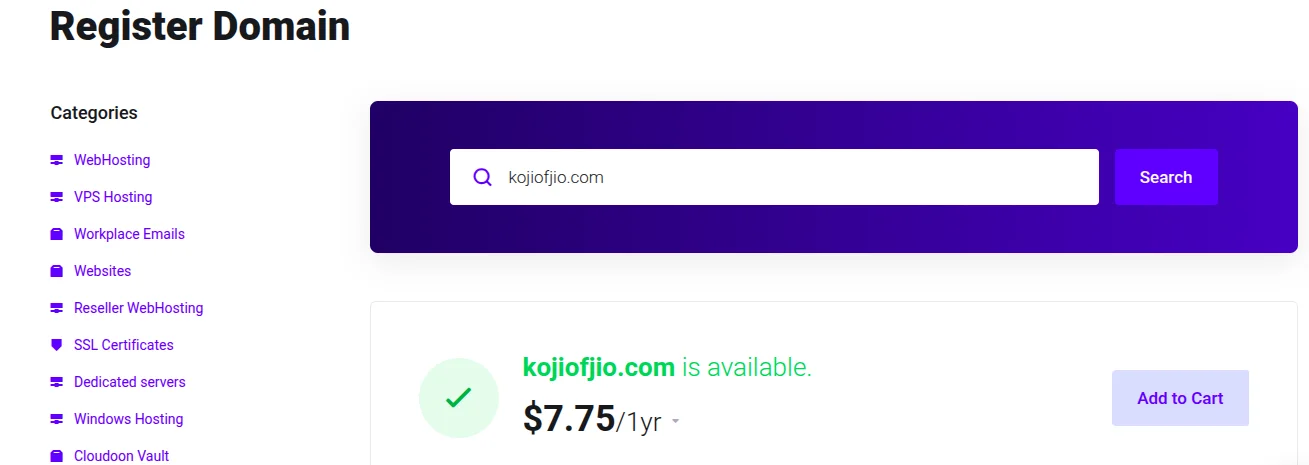
For a fresh registration, a .com typically costs between $10 and $15 per year. Some registrars offer lower promotional pricing for the first year, but renewal rates generally return to the standard range.
Premium domains, meaning short names or common words, can run into the hundreds or thousands on the resale market. For most businesses, a new registration at the standard rate is the practical starting point.
Truehost offers .com domain registration at straightforward pricing with no unexpected fees when renewal time comes around. What you see is what you pay.
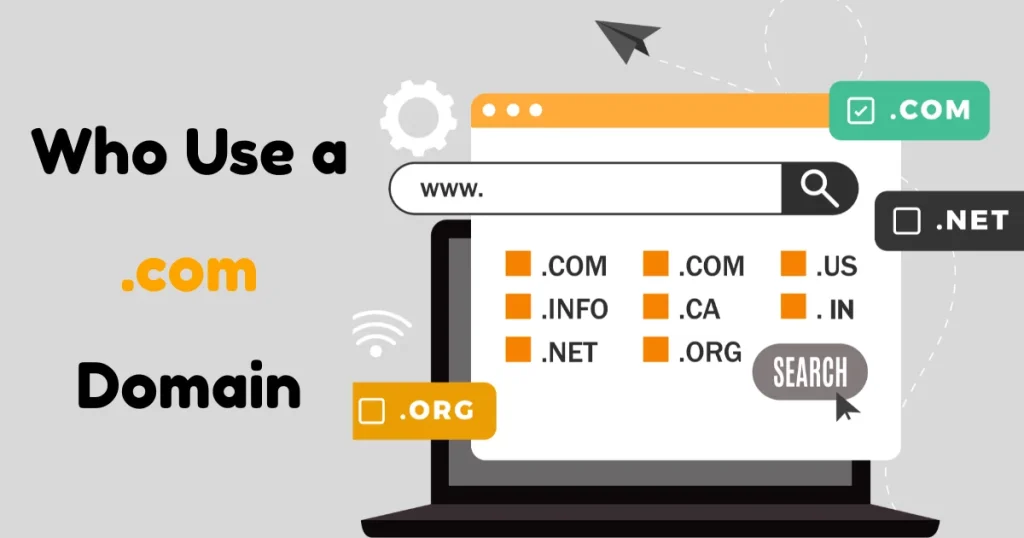
Who Use a .com Domain
1) Businesses
A .com helps any business look professional and ready for customers. It works across industries and makes your brand easier to trust from the start.
2) Startups
Startups need every credibility signal they can get early on, especially when competing against more established names. A .com domain is one of the easier wins, and securing it before your brand grows keeps the cost low.
It is also something investors and accelerators still look at as a basic indicator that a founding team has thought seriously about their positioning.
3) Personal Brands
Coaches, consultants, writers, and creators building a personal brand benefit from owning their name as a .com. It is a professional home base that no social platform can take away from you.
4) Bloggers
Bloggers planning to grow an audience, work with brands, or eventually sell their site are in a far stronger position with a .com. Advertising networks and potential buyers take .com blogs more seriously than those sitting on other extensions.
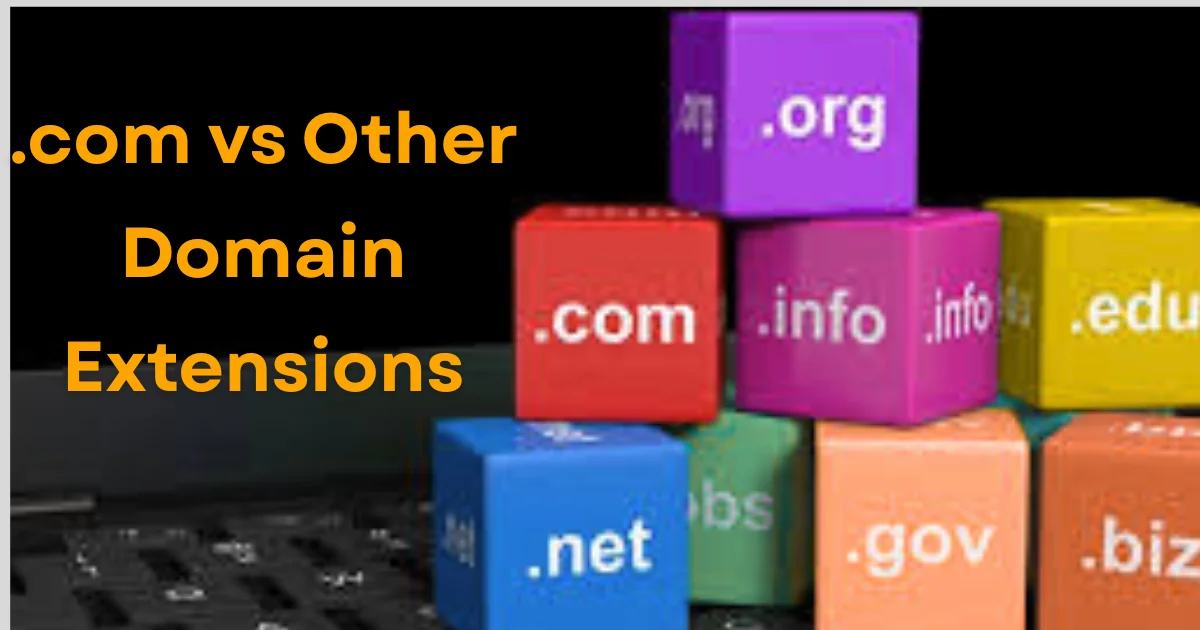
.com vs Other Domain Extensions
.com vs .net
The .net extension has been around nearly as long as .com and is reasonably familiar to most internet users. It was originally created for network-related organizations but is now used more broadly as a fallback option.
It is a better alternative than most newer extensions, but it still sits in second place in most people’s minds. If the .com version of your name is gone, a creative variation that lands you back on .com is usually the better move.
.com vs .co
The .co extension has gained real traction in startup circles, partly because it visually resembles .com and was adopted early by the tech community. It is one of the cleaner alternatives available.
The problem is that muscle memory is hard to fight. Users who know your brand and type it out of habit are still likely to add .com at the end, which sends them somewhere you did not intend.
.com vs Country Extensions
Country extensions like .us, .br, work well for businesses anchored to a specific location. They can improve how you show up in local search and make your geographic focus clear to visitors right away.
For businesses serving a broader or international audience, .com remains the neutral choice that carries no regional assumptions and works for everyone.
.com vs Newer Extensions
Extensions like .store, .tech, .agency, and .online have grown in availability and some niches have adopted them with genuine enthusiasm. They can feel creative and on-brand for the right use case.
For most businesses still building an audience, the trust advantage of .com is difficult to replace with novelty alone. When someone does not know your brand yet, familiar works better than clever.
Top Websites Using .com
Some of the most visited websites in the world run on .com domains.
- Google.com is the most visited site on the internet.
- Amazon.com is the global leader in e-commerce.
- Facebook.com connects billions of people worldwide.
Apple, YouTube, Netflix, and virtually every major brand that has built an online presence at scale has done it on a .com. That pattern is not a coincidence. It reflects what audiences around the world recognize and trust by default.
How to Get the Cheapest .com Domain
Getting a .com domain does not have to be complicated. Here is how to do it without wasting time or second-guessing yourself.
Step 1: Write Down Your Name Options
Before you search for anything, come up with five to ten name ideas. Think about what you want your brand to be known as and write them all down first. That way you are not stuck staring at a blank screen if your first choice is already taken.
Keep each name short and easy to spell. If someone hears it in conversation, they should be able to type it correctly without thinking. Avoid hyphens and numbers where possible since both create confusion when the name is shared verbally or written down.
Step 2: Check Availability
Once you have your list, start searching. Truehost has a domain search tool where you can check availability and register directly if the name is open. The search is fast and shows you alternatives if your first pick is already gone.
Do not get too attached to a single option going in. Having a shortlist makes this step a lot less frustrating.
Step 3: Register Your Domain
When you find an available name, register it straight away. Good .com names do not stay open for long, and waiting even a day can cost you one.
Choose your registration period, enter your contact details, and complete the payment. Registering for more than one year at a time means one less thing to remember down the line.
Step 4: Turn On Auto-Renewal
Set up auto-renewal before you close the tab. It takes thirty seconds and protects you from accidentally losing a domain you have built your brand around.
Expiry reminder emails are easy to miss. Auto-renewal means you never have to rely on remembering.
Step 5: Enable Domain Privacy
At checkout, most registrars offer domain privacy protection. It keeps your personal contact information out of the public WHOIS database and prevents it from being picked up by spam databases.
It is usually a small additional cost and worth switching on from day one.
Step 6: Connect Your Domain to Your Website
After registration, the final step is pointing your domain to wherever your website lives. This is done by updating the nameservers or DNS settings inside your domain dashboard.
.com Domain FAQs
Is .com free?
No. A .com domain requires a registration fee, usually between $10 and $15 per year. Some hosting packages include a free domain for the first year, but renewals always come at a cost.
Why is .com so popular?
It has been the standard since 1985 and became the default extension during the early growth of the internet. Over forty years of consistent use have built a level of trust and recognition that newer extensions have not been able to match.
Can I transfer my .com domain to Truehost?
Yes. You unlock the domain at your current registrar, request an authorization code, and initiate the transfer from your Truehost account. The process is straightforward and your domain stays active throughout.
How long can I register a .com domain?
Between one and ten years, depending on what your registrar offers. Registering for multiple years at once removes the annual renewal concern and can come at a slightly better rate overall.
What happens if I forget to renew my domain?
It enters a grace period where you can still renew at the standard rate. After that, recovery becomes more expensive. Eventually the domain is released for public registration and anyone can claim it. Auto-renewal prevents all of this.
How do I choose a good .com domain name?
Keep it short, easy to spell, and easy to say out loud. Avoid hyphens and numbers. Make it specific enough to reflect what you do but broad enough that it does not box you in as your business grows. If your first choice is taken, a variation on the same name is usually better than settling for a different extension.
Is .com Still a Good Choice in 2026?
Yes. The options have expanded, but .com has not lost its position. It is still what most people expect when they think of a website, and that expectation alone carries real weight.
If you are building something you want people to take seriously, a .com is still the cleanest foundation to start from. The challenge is availability, but a creative variation on your preferred name is almost always worth more than settling for an extension nobody defaults to.
Is a .com Domain Right for You?
For most people building something online, yes. A .com is still the most recognized and trusted extension available, and that recognition does real work for your brand every time someone comes across your web address.
The availability challenge is real. Finding the right name sometimes takes a few rounds of searching and some creative thinking. But once you land on a solid .com, it becomes an asset that grows with your business and holds its value over time.If you are ready to get started, Truehost makes the process simple.