 Domain RegistrationFind and register the perfect domain for your website.
 .COM DomainChoose a widely recognized domain to build global credibility.
 Domain TransferSeamless domain transfers with zero downtime and complete control.
 All TLDsFind and register your perfect domain. Choose from local and global extensions.
 SSL CertificatesKeep your website safe with reliable SSL Certificates that protect customer data and build trust.
 whoisCheck domain ownership details, expiration dates, and registrar information.
 US DomainRegister a .US domain and build trust in the USA.
 Web HostingEverything your website needs to run smoothly
 WordPress HostingWordPress hosting that just works
 Windows HostingReliable hosting for Windows environments
 Reseller HostingTurn hosting into your business
 Email HostingEmail that looks professional and works anywhere
 cPanel HostingFull control of your hosting with cPanel
 Affiliate ProgramJoin as a partner and earn commissions on every referral you send our way.
 Vps HostingScalable virtual servers that expand as you need.
 Dedicated ServersGet complete access and full control over your dedicated physical server.
 Managed vpsNot tech-savvy? We will take care of everything with our fully managed VPS hosting for you.
 AI Website BuilderCreate stunning websites in seconds with AI.
 Online ShopSet up a professional online store. No coding required.
 Web design serviceGet a tailored website designed to match your brand and support your goals.
 BlogFind helpful guides on web hosting, online selling, digital marketing, and more.
 Contact USYou can reach us anytime, day or night, through chat or email.
 SupportBrowse helpful guides and answers for all of our services.
Ever feel like everyone’s speaking a different language when talking about getting online?
You hear “domain name” and “website” thrown around like they mean the same thing. But when you try to get your business online, nothing makes sense. You click “buy now” on something, and you’re still not sure what you just purchased.
Understanding domain name vs website is actually simple once someone explains it in normal English instead of tech jargon.
In this guide, we’ll clear up all the confusion once and for all. Here’s what you’ll learn:
- What a domain name is (the simple truth)
- What a website means (no complicated terms)
- How they’re different (clear comparisons)
- Why you need both (and how they work together)
- What to buy first (practical steps to get online)
- Common mistakes to avoid (save your money and sanity)
By the end, you’ll understand domain name vs website better than most people who’ve been online for years.
Let’s clear this up right now.
What Is a Domain Name?
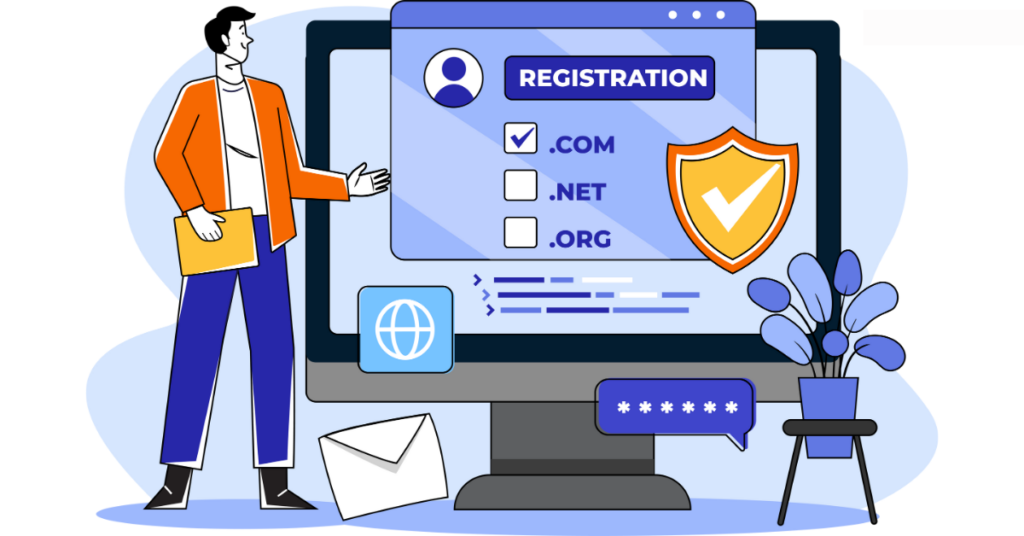
A domain name is basically your address on the Internet. That’s it.
When someone wants to visit your site, they type your domain name into their browser. Things like Truehost.com, Amazon.com, or YourBusiness.com.
Why Domain Names Exist
Here’s the thing. Every website actually lives at a number called an IP address. It looks something like 192.0.2.1, a string of random numbers.
Imagine if you had to remember 192.0.2.1 to check Facebook. Or 198.35.26.96 to shop on Amazon. You’d go crazy trying to remember all those numbers.
That’s precisely why domain names were invented. Instead of typing random numbers, you type Facebook.com into your browser.
Way easier to remember, right?
Think of it like this.
It’s easier for someone to remember “the corner of Main Street and 5th Avenue” than to try to remember exact GPS coordinates like 41°24’12.2″N 2°10’26.5″E.
Your domain name is the friendly, memorable address that points to your website’s actual location.
The Parts of a Domain Name
Every domain name has two main parts.
Take “Google.com” as an example. The word “Google” is called the second-level domain. That’s your unique brand name.
The “.com” part is called the top-level domain, or TLD for short. That’s the extension at the end.
You get to choose both pieces when you register your domain. The brand part can be your business name, your product, or whatever represents you best.
The extension tells people what kind of site you are.
- .com for commercial
- .org for organizations
- .net for networks, and so on.
Right now, over 300 million domain names are registered worldwide. That’s a lot of internet addresses.
How to Get a Domain
You don’t buy a domain name forever. You register it for a period of time, usually one year at a time.
When you register a domain name, you claim a unique spot on the Internet. Nobody else can use that exact address as long as you keep renewing it.
Think of it like renting an apartment. You pay yearly to keep using that address. If you stop paying, someone else can grab it.
What Is a Website? The Complete Picture

Now let’s talk about what a website is, because this is where the domain name vs website gets interesting.
A website is a collection of web pages that people can visit and interact with. It includes all your content, from text, images, videos, buttons, forms, and everything.
The Building Analogy
Here’s the best way to understand domain name vs website:
If your domain name is like a street address, your website is like the actual house at that address. The domain tells people where to find you. The website is what they see when they arrive.
One more way to think about it.
Your domain is the GPS coordinates. The website is the building. Your web hosting (we’ll get to that) is the land the building sits on.
What Makes Up a Website
Websites are built from files. Lots of them.
- There are HTML files that create the structure of your pages.
- CSS files that make everything look good with colors and layouts.
- JavaScript files that make things interactive.
Plus all your images, videos, and other content.
All these files work together to create what visitors see when they type your domain name into their browser.
Think of a website like a physical store. Just as a store has different sections, displays, and products organized for customers, a website has multiple pages organized for easy navigation.
According to recent data, 59% of people prefer browsing websites that are beautiful and well-designed compared to basic ones. Your website is where design, content, and functionality come together.
Where Websites Live
Websites don’t just float around in cyberspace. They have to live somewhere physical.
That somewhere is called a web server, basically a computer that stays connected to the internet 24/7. This server stores all your website files and delivers them to visitors whenever someone types your domain name.
This service is called web hosting. It’s like renting storage space for your website on someone else’s powerful computer.
Without hosting, your website would have no home. It would be an address leading nowhere.
Domain Name vs Website: The Key Differences
Let’s break down domain name vs website side by side so you can see exactly how they differ.
Domain Name Is Your Address

A domain name is the unique identifier that helps people find your website on the Internet. It’s the “where.”
You register it through a company called a domain registrar. At this point, you don’t host it anywhere. You register it and point it to your website.
Domain names typically cost $10-20 per year. That’s it. Pretty affordable.
Here’s something important.
You can own a domain name without having a website at all. Many businesses register domains in advance to secure their online identity. They’re holding onto the address for future use.
You can also use domains for email addresses, even without a website. Like “[email protected].”
Website Is Your Content
A website is a collection of web pages hosted on a server. It’s the “what.”
You build it, design it, and fill it with content. Then you host it on a server so people can access it.
Web hosting typically costs $5-30 per month, depending on your needs. More expensive than a domain, but still reasonable.
Here’s the crucial part.
You cannot have a functional website without connecting it to either a domain name or an IP address. Nobody could access it.
The House Comparison
This is the clearest way to understand domain name vs website.
Imagine your website is a house. Your domain name is the street address. Your web hosting is the land the house sits on.
People need your address (domain) to find your house (website). But the house needs land (hosting) to exist on.
All three pieces work together. Remove any one piece, and the whole system breaks down.
How Domain Names and Websites Work Together
Understanding domain name vs website means understanding how they connect.
What Happens When Someone Visits Your Site
Here’s the step-by-step process that happens in milliseconds.
First, someone types your domain name into their browser, let’s say “YourBusiness.com.”
The browser sends a request to something called a DNS server. DNS stands for Domain Name System, and it acts like the Internet’s phone book.
The DNS server looks up your domain name and finds the IP address of the server where your website is hosted.
Then your browser connects to that server using the IP address and requests your website files.
The server sends all your website files back to the browser, which displays them as the web pages visitors see.
All of this happens so fast you don’t even notice it. But every single website visit follows this exact process.
Why You Need Both
This is the most important thing to understand about domain name vs website: you absolutely need both for people to access your site.
Without a domain name, users can’t easily find your website. They’d have to type in the IP address, which nobody remembers or wants to do.
Without a website, there’s no content to access. Your domain would be an address pointing to an empty lot.
Both are necessary for a functioning online presence. They’re separate things that must work together.
The Beauty of Separation
Here’s what’s cool about keeping the domain and website separate: flexibility.
Your domain provides a permanent web address that stays the same even when you completely rebuild your website or switch to a different hosting company.
You can move your website to different hosting providers by simply updating your DNS settings to point your domain to the new server’s IP address. Your visitors never notice the change because your domain stays the same.
Domain vs URL vs Website: Clearing Up More Confusion
Let’s tackle another common confusion point that comes up when discussing a domain name vs website.
What’s a URL?
A URL (Uniform Resource Locator) is the complete web address, including everything.
For example, in the URL “https://yoursite.com/about,” the domain name is just “yoursite.com.” The full URL includes:
- The protocol (https)
- The domain name (yoursite.com)
- The path to a specific page (/about)
So the domain is part of the URL, but the URL is more complete. It points to specific pages, while a domain points to your entire site.
How They All Fit Together
Think of it this way:
- Your domain is like your street address
- Your website is like your house
- A URL is like directions to a specific room in your house
- Web hosting is like the land your house sits on
People use these terms interchangeably, but they’re actually different pieces of your online presence.
What You Need to Get Online
Now that you understand domain name vs website, let’s talk about what you need to get your business online.
The Three Essential Components
To have a working website, you must have all these pieces.
A domain name gives people an address to type. Choose something memorable and relevant to your business. Make sure the .com version is available.
Web hosting to store your website files and make them accessible 24/7. The hosting company provides the server space and resources like bandwidth and storage.
A website with actual content, your pages, images, text, and everything visitors interact with.
All three work together. Miss one piece, and nothing works.
Getting Started: The Right Order
Here’s the smart way to approach getting online.
First, register your domain name. Secure your address before someone else grabs it. Domain names are unique—once someone has it, you can’t use it.
Second, get web hosting. Choose a hosting plan that matches your needs. If you’re starting out, shared hosting works great and costs less.
Third, connect your domain to your hosting. This involves updating DNS settings, which sounds technical, but most hosting companies do it automatically for you.
Fourth, build your website. Add content, design, and functionality. Many hosting companies provide website builders that make this easy, even if you’ve never built a site before.
Bundled vs Separate: What’s Better?
When buying a domain and hosting, you have two options.
Buying Everything Together
Many hosting companies let you register your domain when you sign up for hosting. They bundle it together in one package.
This simplifies everything. You manage the domain, hosting, and website from one dashboard. Renewal happens at the same time. And the hosting company usually connects everything automatically.
Plus, most hosting companies include your first domain registration free when you buy annual hosting. That saves you $10-20 right off the bat.
For beginners, bundling is usually the easiest choice.
Buying Separately
You can also register your domain at one company and get hosting from another company.
This gives you more flexibility. You can shop around for the best domain registrar and the best hosting provider independently.
The downside? You have to manually configure DNS settings to connect your domain to your hosting. It’s not hard, but it’s an extra step.
A domain purchased at one registrar can be connected to your website regardless of where it’s hosted. They’re separate services that work together.
What Makes Sense for You
For most people starting out, buying a domain and hosting together from one company makes everything easier.
As you get more experience, you should consider keeping them separate. But when you’re just trying to get online, simplicity wins.
Common Mistakes You Can Make
Now that you understand domain name vs website, let’s make sure you avoid these common errors.
Buying a Domain Without Hosting
This happens all the time. Someone gets excited, registers an excellent domain name, then realizes they can’t actually put a website there without hosting.
Your domain just sits parked, meaning the registrar displays a basic placeholder page that says the domain is registered, but nothing’s there.
Always get hosting when you register your domain, or at least have a plan for when you’ll get hosting.
Getting Hosting Without Securing the Domain
The opposite mistake happens too. Someone signs up for hosting but forgets to register their domain first.
Then they discover someone else grabbed their perfect domain name while they were setting up hosting. Now they’re stuck choosing a different name or paying a premium to buy it from the current owner.
Always secure your domain name first. It’s your online identity. Protect it.
Letting Your Domain Expire
Domain names require annual renewal. If you forget to renew, your domain expires and becomes available for anyone else to register.
Losing your domain is devastating. All your marketing, business cards, customer bookmarks, and everything breaks instantly.
Always enable auto-renewal on your domain registration. It’s worth the peace of mind.
Not Understanding DNS Propagation
When you connect your domain to hosting, the changes take time to spread across the Internet. This is called DNS propagation, and it typically takes 24-48 hours.
During this time, some people might see your new site while others still see the old one (or nothing). This is completely normal.
Don’t panic and start changing settings multiple times. Just wait patiently for propagation to complete.
Choosing the Wrong Hosting Type
Not all hosting is created equal. Shared hosting is cheap but limited. VPS hosting is more powerful but more expensive. Dedicated hosting gives you an entire server but costs serious money.
For most new websites, shared hosting works perfectly fine. Don’t overpay for hosting power you don’t need yet. You can always upgrade later.
Why This All Matters for Your Business
Understanding domain name vs website isn’t just academic; it directly impacts your business success.
Your Domain Is Your Brand
Your domain name represents your business online. It’s often the first impression people have of you.
Having a professional domain name gives your business credibility and legitimacy online. An email like “[email protected]” looks way more professional than “[email protected].”
Choose your domain carefully. Once you build brand recognition, changing domains means starting over from scratch.
Your Website Is Your Sales Tool
Your website does the actual work of converting visitors into customers.
A well-designed website makes it easier for people to find information, trust your business, and make purchases. According to research, having a strong relationship between your domain and website is essential for visitors to find and remember your site.
Both your domain and website can be used for branding purposes, promoting your business, products, or services.
Search Engines Care About Both
Search engines like Google associate content and rankings with your domain name. Building SEO value takes time.
That’s why maintaining the same domain while improving your website preserves and builds upon your SEO investment. Change domains, and you lose all that accumulated search ranking power.
Your website content affects rankings, too. Quality content, fast loading times, mobile responsiveness. These all matter for search visibility.
A domain name that includes relevant keywords can help improve search engine rankings slightly, making it easier for people to find your website. But good content matters more than keyword domains.
Get Your Domain and Website with Truehost
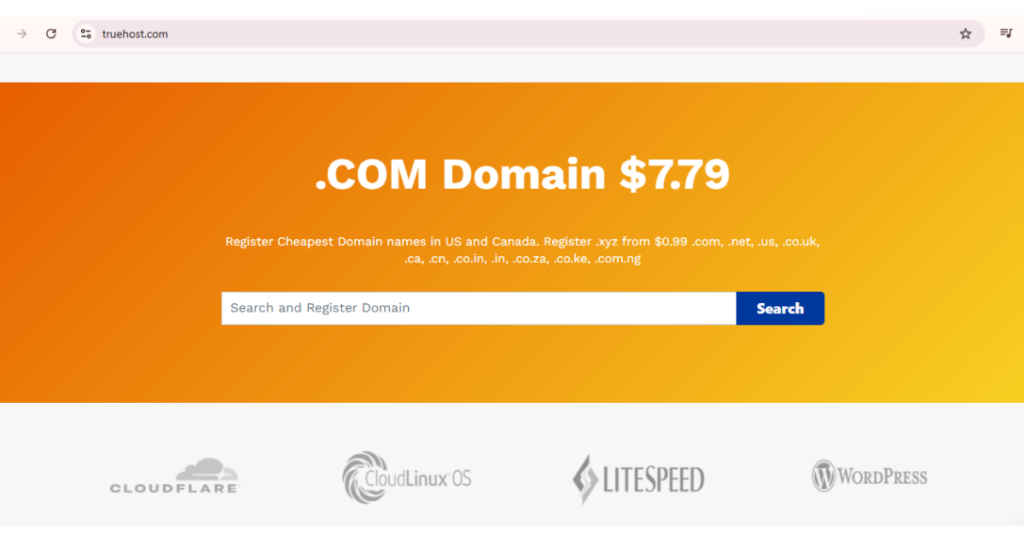
Ready to stop being confused about domain name vs website and get your business online?
Truehost makes everything simple by giving you both in one place.
Complete Domain and Website Solution
When you sign up with Truehost, you get everything you need.
Free domain registration is included with annual hosting plans. Save $10-20 right away.
Fast, reliable hosting with 99.9% uptime guarantee so your site stays online 24/7
Automatic DNS configuration that connects your domain to hosting instantly. No technical headaches
One-click website builders that let you create professional sites in minutes, even with zero experience
Free SSL certificates included for security and visitor trust
Professional email addresses using your domain, like [email protected]
24/7 expert support from real humans who actually help when you have questions
Easy management dashboard where you control your domain, hosting, email, and website together
Why Bundle Domain and Hosting with Truehost
Simplified setup means we automatically connect your domain to hosting. No manual DNS configuration needed.
Cost savings add up when you get your first-year domain free with annual hosting plans.
A single dashboard lets you manage everything from one place. No juggling multiple accounts at different companies.
Expert support from one team that handles all your questions about domains, hosting, and websites.
Migration assistance if you already have a domain or website elsewhere. We’ll move everything for free with zero downtime.
Room to grow as your business expands. Start simple with basic hosting, then upgrade easily when you need more power.
Stop Being Confused, Start Being Online
You now understand domain name vs website better than most people who’ve been online for years.
Your domain is your address. The website is your presence. Your hosting is your foundation.
All three work together to create your online business.
Don’t waste time piecing together domain and hosting from different providers. Get everything you need in one place with Truehost.
Your business deserves to be online. Your customers are searching for the products and services you offer right now.