 Domain RegistrationFind and register the perfect domain for your website.
 .COM DomainChoose a widely recognized domain to build global credibility.
 Domain TransferSeamless domain transfers with zero downtime and complete control.
 All TLDsFind and register your perfect domain. Choose from local and global extensions.
 SSL CertificatesKeep your website safe with reliable SSL Certificates that protect customer data and build trust.
 whoisCheck domain ownership details, expiration dates, and registrar information.
 US DomainRegister a .US domain and build trust in the USA.
 Web HostingEverything your website needs to run smoothly
 WordPress HostingWordPress hosting that just works
 Windows HostingReliable hosting for Windows environments
 Reseller HostingTurn hosting into your business
 Email HostingEmail that looks professional and works anywhere
 cPanel HostingFull control of your hosting with cPanel
 Affiliate ProgramJoin as a partner and earn commissions on every referral you send our way.
 Vps HostingScalable virtual servers that expand as you need.
 Dedicated ServersGet complete access and full control over your dedicated physical server.
 Managed vpsNot tech-savvy? We will take care of everything with our fully managed VPS hosting for you.
 AI Website BuilderCreate stunning websites in seconds with AI.
 Online ShopSet up a professional online store. No coding required.
 Web design serviceGet a tailored website designed to match your brand and support your goals.
 BlogFind helpful guides on web hosting, online selling, digital marketing, and more.
 Contact USYou can reach us anytime, day or night, through chat or email.
 SupportBrowse helpful guides and answers for all of our services.
Ever stared at your screen for hours trying to create the perfect domain name, only to find everything good is already taken?
You’re stuck in naming purgatory.
Every clever idea you have is registered. The good names cost thousands of dollars. Your friends think your backup options sound confusing or boring. Meanwhile, you see successful companies with names like Google, Spotify, and Slack, names that seemed to come out of nowhere, and wonder how they nailed it.
The pressure builds because you know your domain choice isn’t just a web address. It’s the name people will remember, type, share, and associate with your business for years. Pick wrong or a bad one, and you’ll spend countless conversations explaining how to spell it.
You’ll lose customers who can’t find you. You might even need a costly rebrand down the road.
So, I want us to learn today on:
- What makes a brandable domain name stick in people’s minds
- Seven proven techniques for creating memorable names
- How to test your ideas before committing
- Common mistakes that kill brandability
- Real examples from companies that got it right
Let’s break this down and get you unstuck.
What Makes a Domain Name “Brandable” Anyway?
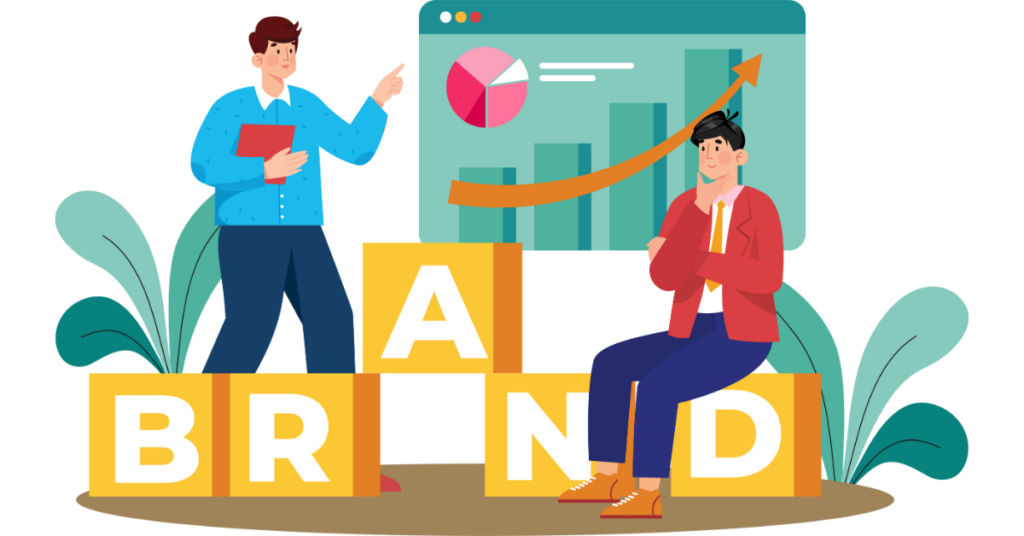
Think about Amazon for a second. Before Jeff Bezos built his empire, “Amazon” just meant a river or maybe some warriors from Greek mythology. The word had nothing to do with shopping online.
That’s what a brandable domain name does. It’s an empty container that you fill with meaning through your business. Compare that to “OnlineBookstore.com,” which tells you exactly what it sells but gives you zero personality, zero memorability, and zero room to grow.
A truly brandable name has four key ingredients.
It’s memorable
You hear it once, and it sticks. Research from 2024 shows that 47% of consumers consider memorability the most important characteristic when evaluating domain names. That’s nearly half of all potential customers making decisions based on whether they can remember you.
It’s simple
No mental gymnastics required. You can spell it after hearing it once. You can type it quickly on your phone. There’s no confusion about whether it uses a hyphen or which vowels go where.
It’s pronounceable
This matters more than ever in 2026, as voice search continues to grow. When someone says, “Hey Google, search for…” your name, it needs to work. If people stumble over saying it out loud, you’ve already lost.
It stands apart
Your brandable domain name doesn’t sound like the rest of your industry. It creates its own space. When people Google it, you own the results instead of fighting with ten similar names.
The companies winning today all followed this formula.
- Spotify combined “spot” and “identify” into a new term.
- Etsy invented a word that sounded crafty and handmade.
- Slack took an everyday word and gave it a new meaning in the workplace.
None of these names described what the company did. Instead, they created a brand that people could connect with emotionally.
Why Your Brain Loves Certain Names (And Forgets Others)
Your brain is lazy.
That’s not an insult, it’s just how we’re wired. When faced with complex information, our minds look for shortcuts.
Names that require less mental effort stick around longer. Scientists call this “cognitive ease.” When something is easy to process, we tend to like it more and remember it better. That’s why “Zoom” beats “VideoConferencingSoftware” every single time.
Sound patterns play a huge role, too.
Notice how many successful brands use alliteration? PayPal. TikTok. Coca-Cola. The repeated consonant sound creates a rhythm that your brain latches onto.
Or consider rhyming: YouTube, StubHub. These names almost sing themselves into your memory.
Hard consonants at the beginning grab attention. Think about Stripe, Slack, and Square. These names sound strong and decisive. They make an impact when you say them.
Here’s something interesting: your brain processes concrete words faster than abstract ones. A word like “Apple” immediately creates a picture in your mind. Abstract business jargon like “synergy” or “optimization” creates… nothing. Just fog.
This explains why so many tech companies choose real objects or animals as names. Panda, Tiger, Falcon. These words trigger instant visual associations. When you hear “Firefox,” you see something. When you hear “DataSynergySolutions,” you see… buzzwords.
Emotional connections matter too.

Names that make you feel something stick harder than neutral terms. “Calm” for a meditation app works because the name itself creates the emotion they’re selling. “Brave” for a web browser suggests confidence and security.
Your brandable domain name should work with these brain patterns, not against them. The easier you make it for people’s brains to process and store your name, the more likely they’ll remember you when it counts.
Seven Ways to Create Brandable Domain Names That Stick
Let’s get practical.
Here are the techniques that successful companies use to create brandable domain names.
Technique 1: Invent Completely New Words
Google. Etsy. Hulu. Skype. These words didn’t exist before someone created them. They’re 100% unique, meaning nobody else has them, and you can easily trademark them.
The trick is making your invented word sound natural. You can’t just smash random letters together. Combine syllables that flow together. Try adding familiar prefixes or suffixes.
Think about “Spotify”. It sounds like it could be a real word, even though it isn’t.
When you invent a word, say it out loud twenty times. If it still sounds legitimate and isn’t making your tongue twist, you might have a winner.
Technique 2: Smash Two Words Together
Facebook. PayPal. Snapchat. YouTube. LinkedIn. Netflix. Notice a pattern? Some of the biggest brands on earth combine two existing words in unexpected ways.
This approach gives you more options than single words while staying memorable. The key is picking words that complement each other. One concrete word plus one action word often works beautifully. Dropbox. Kickstarter. Salesforce.
You can also try contrasting concepts. HotSchedules. SweetBitter. The tension between opposite ideas makes the name interesting.
Technique 3: Steal Dictionary Words
Amazon wasn’t about rivers or warriors until Bezos made it about shopping. Apple had nothing to do with computers until Steve Jobs chose it. Oracle suggests wisdom and knowledge, which are perfect for a database company, even though the words existed long before.
Real words come pre-loaded with associations and emotions. Your job is to find words that connect to your brand values without obviously describing what you do.
- Nature words work well: River, Thunder, Coral.
- Animal names stick: Panda, Tiger, Falcon.
- Action verbs suggest motion: Launch, Rise, Forge, Pilot.
- Objects and things: Canvas, Notion, Slack.
The .com domain market remains dominant, with 157.2 million registrations as of recent data, making competition for single-word domains fierce. But the right word in a smart extension like .io or .co can still work.
Technique 4: Focus on Action
In 2026, startups are increasingly choosing action-based names. Doer, Solver, Agent, Forge, Flow, Pilot, Craft. These names suggest utility and movement. They tell people something happens when they use your product.
Think about what users do with your product. Do they build? Create? Discover? Find? Transform? That action becomes your name.
Technique 5: Add Smart Modifiers
Can’t get the perfect name? Add a simple prefix or suffix that doesn’t dilute your brand. GetBubbly. GoMunch. ShopCosta. MyFitnessPal.
Common modifiers that work: Get, Go, Try, Use, Meet, Shop, The, My, Our. Keep your total length under 15 characters, though. Every extra letter chips away at memorability.
Technique 6: Try Domain Hacks
Domain hacks use the extension as part of the name itself. Think bit.ly, del.icio.us, or artif.ai. When done right, these are clever and memorable. When done wrong, they’re confusing.
The hack must be obvious. If people need to think about it, skip it.
Technique 7: Suggest Without Describing
Slack isn’t a description of team communication software. But “slack” suggests ease and casualness, which is exactly how they want work to feel. Calm doesn’t describe meditation techniques. But the word itself creates the peaceful feeling they sell.
These evocative names hint at benefits without boxing you in. They give your brandable domain name emotional weight while leaving room for interpretation and growth.
The Length Question Everyone Gets Wrong
Think about characters
The sweet spot for a brandable domain name is 6 to 14 characters. Short enough to remember and type easily. Long enough to create meaning and personality.
Under 6 characters? Fantastic if you can get it. Extremely rare and usually expensive, but incredibly powerful. Zoom. Uber. Etsy. These ultra-short names dominate recall.
Over 15 characters? You’re fighting an uphill battle. Maybe you’ll succeed with massive marketing budgets, but why make life harder?
Count syllables too.
Two to four syllables is your target range. One-syllable names sound strong and punchy: Stripe, Square, Slack. Two syllables hit the sweet spot: Netflix, Asana, Canva. Three syllables still work: Pinterest, Instagram, Dropbox.
Go beyond four syllables, and you’re pushing it. Your brandable domain name should roll off the tongue, not require a breath in the middle.
Think about mobile too.
We’re typing on phones more than keyboards now. Shorter names mean fewer chances for typos and autocorrect disasters. They’re simply easier to deal with in our mobile-first world.
Voice search compounds this. When someone asks Alexa or Siri to find you, complicated names create problems. Simple pronunciation wins.
What to Absolutely Avoid
Let’s talk about the mistakes that kill brandability.
Never use hyphens.
Seriously. Best-Coffee-Shop.com might seem fine on paper, but try saying it out loud. “Go to best hyphen coffee hyphen shop dot com.” See the problem? Hyphens are also associated with spam domains from the early 2000s. They make you look less professional.
Skip the numbers.
Is it “4you.com” or “foryou.com” or “fouryou.com”? When someone hears your domain, they shouldn’t need to guess. Numbers create confusion. The only exceptions are brands like 37signals, where the number is integral to the identity, and even they eventually became Basecamp.
Don’t chase trendy misspellings.
Flickr, Tumblr, and Digg made this work years ago with massive marketing budgets. For most businesses, misspellings send traffic to the correctly spelled version that someone else owns. In 2026, these alternative spellings feel dated and can come across as unprofessional.
Avoid confusing character combinations.
Letters that look similar, like lowercase L and uppercase i, or zero and the letter O, cause problems. Double letters that people constantly misspell are risky, too.
Don’t ignore trademark issues.
Falling in love with a name before checking if you can legally use it leads to heartbreak. Someone might already own the trademark in your industry. Check before you commit, not after.
Remember social media handles.
37% of users aged 18-34 consider matching domain and social media handles important. If you can get YourBrand.com, but all the social handles are taken, you’ll spend years explaining why you’re @YourBrandHQ on Instagram and @YourBrand_Official on Twitter. That inconsistency weakens your identity.
How to Test Before You Commit
You’ve got some name ideas. Great. Now put them through real tests before spending money.
The radio test comes first.
Imagine announcing your domain on the radio. Could someone hear it once and type it correctly? If you’re hesitating or mentally explaining “it’s coffee but with a K,” that’s a red flag.
Next, try the memory test.
Tell ten people your top name choices. Wait 24 hours. Ask them to recall the names. The ones people remember win. The ones people forget lose, no matter how clever you think they are.
Google every candidate.
What comes up? Are there conflicts with existing brands? Could you own page one of the results for branded searches? If you’ll constantly fight to appear when people search your own name, reconsider.
Check international meanings.
Run your names through Google Translate for major languages. You’re looking for embarrassing translations or negative associations. This saves you from launching a brand name that means something offensive in Spanish or ridiculous in German.
Say the names out loud.
A lot. Does it feel natural or awkward? Can you shout it across a room? Does it work in a sentence? “I use [name] for my projects.” If it doesn’t flow naturally in conversation, people won’t share it naturally either.
Get feedback from people in your target market.
But here’s the trick: don’t ask “do you like this name?” Ask “what do you think this company does?” Their answers reveal what associations your brandable domain name creates. You want those associations to match your brand personality.
Real Success Stories Worth Studying
Let’s look at names that worked and why.
Story story
Story come, right?
Google started as “BackRub.” Terrible name. Then Larry Page and Sergey Brin landed on Google. A play on “googol,” the mathematical term for a huge number.
It was a misspelling, but it worked. Short, fun to say, unique, and completely meaningless until they made it mean search. Now it’s literally a verb.
Spotify blended “spot” and “identify” into something fresh. Two syllables. Easy to spell. Pronounceable globally. The name had no inherent meaning but sounded modern and tech-forward. Perfect for a music streaming service.
Slack is an acronym for “Searchable Log of All Conversation and Knowledge,” but that’s not why they chose it. They picked “slack” because it suggests ease and casualness. It’s counter-intuitive for a work tool, which made it memorable. Single syllable. Clear pronunciation. Emotional association with taking it easy. Brilliant.
Canva took “canvas” and changed one letter. This gave them a brandable domain name that was available while keeping the connection to creativity and design. The meaning stayed obvious while the spelling became unique.
These companies share common threads. They’re all short. All pronounceable. All distinctive. And none of them simply described what they did.
Picking Your Extension Wisely
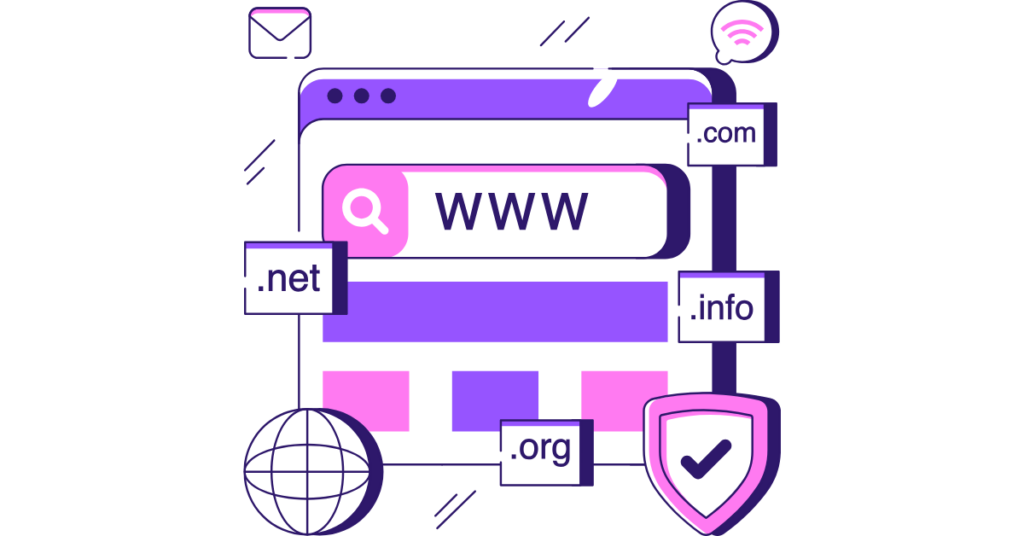
You need to talk about the extension, the .com or .io or whatever comes after your name.
The .com Standard
The .com remains king. No debate. It’s what people default to when they hear a domain. If someone mentions YourBrand, most people will automatically try YourBrand.com first. That default assumption gives .com tremendous power.
But alternatives work in specific situations.
When Alternative Extensions Work
.io (Tech/Startup favorite
The .io extension has become the calling card for tech startups and SaaS companies. If you’re building developer tools or software, .io signals you’re part of that world. Short, brandable .io domains are gaining serious momentum due to high demand from the tech community.
.co (Clean.com alternative)
The .co serves as a clean alternative when .com isn’t available. It’s perceived as modern and sleek. Many successful companies use .co and make it work.
.ai (Artificial Intelligence)
The .ai extension is exploding right now because of artificial intelligence hype. Perfect for AI products and machine learning companies. But be aware: when the AI trend normalizes, .ai domains might feel dated.
Industry-specific TLDs
Industry-specific extensions like .tech, .app, .design, .studio, and .shop work when they strengthen your brand identity. A creative agency using .studio makes sense. A software company using .app makes sense. A bakery using .tech? That’s confusing.
Country-Code TLDs (ccTLDs) for Branding
Country-code extensions can work too. Some have been adopted globally beyond their original countries. The .me extension (Montenegro) works for personal brands. The .tv extension (Tuvalu) works for video content.
Here’s your strategy.
Secure the .com if it’s available and affordable. If the .com is taken or crazy expensive, choose an alternative extension that actually enhances your brandable domain name rather than fighting against it.
And always register common variations to protect your brand.
Your Simple Four-Week Framework
Let me give you a roadmap that takes the overwhelm out of this process.
Week 1: Discovery
Spend the first few days defining your brand.
- What are your core values?
- Who’s your target audience?
- What personality do you want, playful or serious?
- Modern or traditional?
Write down 50+ words related to your business. Include action verbs, emotions, metaphors, and concepts. Study your competitors’ names. Find patterns and gaps.
Week 2: Generate Ideas
Create at least 100 name ideas. Yes, 100. Use all the techniques we covered.
- Invented words.
- Compound words.
- Creative real words.
- Action-based names.
- Domain hacks.
Most will be terrible. That’s fine. You’re looking for diamonds in the rough. After generating your list, eliminate obvious losers.
- Names that are too long,
- Too similar to competitors
- Fail the pronunciation test
- Have clear trademark conflicts.
Get down to your top 30.
Week 3: Test Everything
Check domain availability for your top 30.
- Verify social media handles.
- Google each name to find conflicts.
- Say them out loud.
- Get feedback from friends and potential customers.
- Test memorability by seeing who remembers them after 24 hours.
- Check international meanings.
- Run trademark searches.
This week narrows you down to your top 3-5 finalists.
Week 4: Decide and Secure
Compare your finalists using a simple scorecard. Rate each on;
- Memorability
- Simplicity
- Pronounceability
- Distinctiveness
- Domain availability
- Trademark clearance
- Social media availability.
Sometimes your gut feeling matters here, after all the analysis.
Which name would you be proud to say for the next ten years?
Which gives you the most room for creative brand building? Pick one. Then immediately register the domain, claim social handles, and file for trademark protection.
The aftermarket domain name market is projected to reach USD 1.17 billion by 2033, showing that quality domains are valuable assets. Don’t overthink this forever, but don’t rush it either.
Four weeks is enough time to do it right.
Building Meaning After You Choose
Can I tell you a secret?
Your brandable domain name is worthless when you first register it.
- Google meant nothing.
- Amazon meant nothing in the e-commerce context.
- Spotify meant nothing.
These companies spent years filling their empty vessels with meaning through marketing, customer experience, and consistent use.
Your job after choosing is building that meaning.
Every customer interaction should strengthen what your name represents.
For SEO, brandable domains start at zero authority. You’ll build it over 6-12 months through quality content, backlinks, and increasing branded search volume. As more people search specifically for your brand name, Google recognizes you as an entity worth ranking.
The patience pays off.
Brandable domains compound value over time. As your brand grows, so does the power of your name. Companies with strong brandable domain names see advantages multiply as recognition builds.
Direct traffic increases because people remember and type your URL. Branded searches grow because customers specifically look for you. Word-of-mouth improves because your name is easy to share.
Backlinks grow naturally when people mention memorable brands.
The Bottom Line on Brandable Names
Creating a brandable domain name isn’t about finding the perfect word hiding in some corner of the dictionary. It’s about building something memorable, simple, and distinctive that you can fill with meaning through your work.
The process takes time. Expect to spend 3-4 weeks doing it right. Generate way more ideas than you need. Test relentlessly. Don’t settle for something that makes you explain the spelling every time.
Remember the key principles:
- Keep it under 15 characters
- Make it pronounceable
- Ensure it’s distinctive
- Test it with real people before committing.
The names that win aren’t the ones that describe everything you do. They’re the ones that stick in people’s minds and grow into something bigger than themselves. Google, Spotify, Slack, and thousands of other successful brands prove this approach works.
Already have the brandable name, it’s high time you secure it with Truehost before someone else grabs it.
Make Your Domain Name Brandable FAQs
.com remains the most trusted extension globally, but brandable names can succeed with .io, .co, or .ai if they fit your industry. Tech startups particularly succeed with alternatives. However, if your .com is available and affordable, choose it.
The budget depends on the business stage. Bootstrappers: $10-$500 for available domains. Funded startups: $1,000-50,000 for premium names. Enterprise: $50,000-1,000,000+ for iconic one-word .coms. Remember: Your domain appreciates your brand.
Yes. Hybrid approaches work. Combine a keyword with a brandable element (BrewBuddy, CodeCraft, DataForge). Keep the total length under 15 characters and ensure it passes the radio test.
Try: (1) Add modifier (Get/Go/Try)
(2) Different TLD (.io/.co/.ai)
(3) Slight variation that’s equally brandable
(4) Contact owner to purchase
(5) Choose completely different name.
Never compromise on brandability. Find another great option.