 Domain RegistrationFind and register the perfect domain for your website.
 .COM DomainChoose a widely recognized domain to build global credibility.
 Domain TransferSeamless domain transfers with zero downtime and complete control.
 All TLDsFind and register your perfect domain. Choose from local and global extensions.
 SSL CertificatesKeep your website safe with reliable SSL Certificates that protect customer data and build trust.
 whoisCheck domain ownership details, expiration dates, and registrar information.
 US DomainRegister a .US domain and build trust in the USA.
 Web HostingEverything your website needs to run smoothly
 WordPress HostingWordPress hosting that just works
 Windows HostingReliable hosting for Windows environments
 Reseller HostingTurn hosting into your business
 Email HostingEmail that looks professional and works anywhere
 cPanel HostingFull control of your hosting with cPanel
 Affiliate ProgramJoin as a partner and earn commissions on every referral you send our way.
 Vps HostingScalable virtual servers that expand as you need.
 Dedicated ServersGet complete access and full control over your dedicated physical server.
 Managed vpsNot tech-savvy? We will take care of everything with our fully managed VPS hosting for you.
 AI Website BuilderCreate stunning websites in seconds with AI.
 Online ShopSet up a professional online store. No coding required.
 Web design serviceGet a tailored website designed to match your brand and support your goals.
 BlogFind helpful guides on web hosting, online selling, digital marketing, and more.
 Contact USYou can reach us anytime, day or night, through chat or email.
 SupportBrowse helpful guides and answers for all of our services.
You worked hard to build your business.
- You created a website.
- You chose a name.
- You built a brand people can recognize.
- Your product or service solves real problems.
But then a customer receives an email from [email protected] instead of your business domain and something shifts. It may be small, but it counts.
A free email address can make a real business look less established.
- Customers pause for a second.
- They wonder if the business is legitimate.
- Some ignore the message.
- Others choose a competitor that looks more professional.
This is the quiet damage free email addresses cause. It rarely happens all at once. Instead, it happens slowly, through small doubts that grow over time.
In this article, we look at seven ways free email accounts hurt your business credibility and why they can cost you trust, customers, and opportunities.
Stay until the end to discover the simple solution that resolves this issue.
1) Reduces Brand Trust

When a customer gets an email from you, the first thing they check, even without thinking about it, is who sent it. If your email ends in @gmail.com or @yahoo.com, it doesn’t match your website. That mismatch creates doubt.
Customers ask themselves:
- Is this a real business?
- Is this even the right person?
- Could this be a scam?
Free emails don’t carry the same weight as a domain email. Every trust signal you’ve built through your website, your branding, and your service gets a little weaker the moment your message lands from a free address.
Think about it from your customer’s side.
- A customer visits a clean, professional website.
- They read your services page.
- They’re almost ready to reach out.
- Then they get a reply from
[email protected].
That one detail undoes a lot of the work your website just did.
Domain emails keep your trust signals consistent across every touchpoint, your site, your emails, your invoices, and your follow-ups.
2) Looks Unprofessional
A generic email domain tells customers you haven’t invested in the basics. It makes your business appear newer or smaller than it actually is. Customers notice, especially the ones comparing you to a competitor.
When someone is deciding between two businesses and one email from [email protected] while the other is from [email protected], the choice gets easier.
The domain email signals that the business is established, organized, and serious. Free emails do the opposite.
Here’s the thing:
Domain email costs very little.
At Truehost, we include it with hosting plans starting at $1.50/month. So when a customer sees a free email address, they don’t think “they’re saving money.” They think “they didn’t bother.”
That perception is hard to undo once it’s formed, especially with a new customer who hasn’t yet decided to trust you.
3) Weakens Brand Identity
Every email you send is a chance to reinforce your brand. Your name, your domain, your business, right there in the sender line.
When you use free email, you throw that away. Instead of promoting your business, every message you send promotes Gmail or Yahoo. Your brand name disappears from the conversation.
Customers see @gmail.com and remember Gmail. They see @yahoo.com and remember Yahoo. Over time, your business identity gets diluted. People forget who they were talking to. Brand recall drops.
And you paid for none of it, because the platform you accidentally advertised got the attention instead.
Every domain email you send does the opposite. It puts your business name in front of your customer one more time. That repetition builds recognition. And recognition builds trust over the long run.
It’s one of the easiest branding wins available to a small business. Free emails throw it away on every single send.
4) Triggers Spam Filters
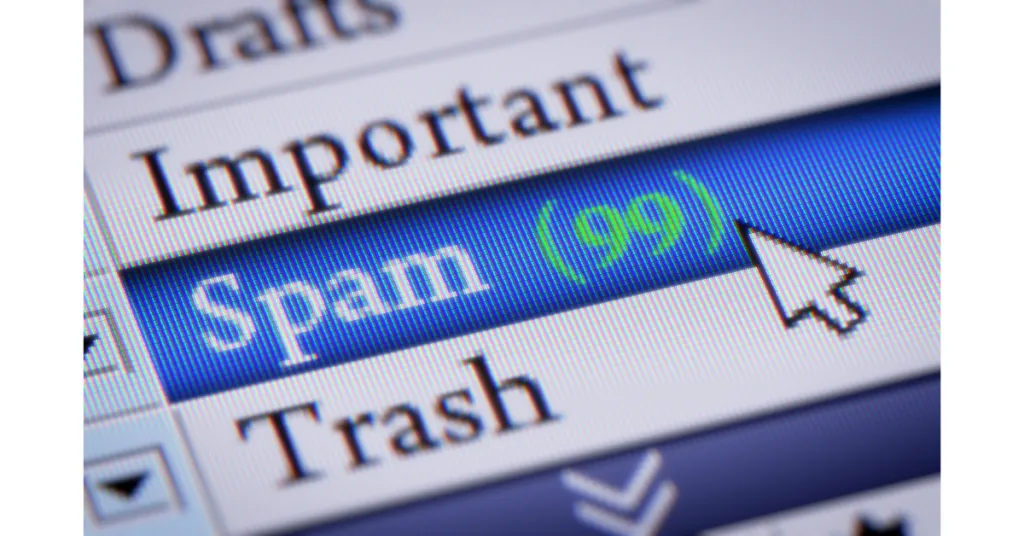
Free email domains get abused constantly. Spammers create free accounts by the thousands, use them to blast junk mail, and move on. Email providers know this. So they treat free email domains with more suspicion than domain-based business emails.
When you send business emails from a free address, you’re sharing a reputation with every spammer who ever used that same domain. Your message lands in the spam folder before your customer even knows it arrived.
- Deals don’t close.
- Invoices get missed.
- Follow-ups disappear.
- And zero subscribers.
And you have no way to fix it because you don’t control the domain or its email authentication settings. Things like SPF, DKIM, and DMARC are records that tell email providers your messages are legitimate.
With free emails, you can’t set those up properly. With a domain email, you can. That difference alone can determine whether your messages reach your customers or vanish into a spam folder they never open.
5) Reduces Customer Confidence
Customers in 2026 expect businesses to have a domain email. When your email doesn’t match your website, customers read that as a signal. They assume you’re running a small, informal operation. Or that something is off.
Your competitors who use domain email already look more credible than you, even if their product is worse. Confidence is built before a word of your email gets read.
The sender address does that work, or it doesn’t. Free emails make sure it doesn’t.
Here’s what that costs you in practice.
A potential client is on the fence because your proposal is solid. Then they see your free email address. They wonder if you’ll still be around in six months. That small doubt is enough to make them hesitate or stop replying altogether.
Domain email removes that doubt before it forms. It tells customers you’re serious, you’re established, and you’re not going anywhere.
6) Limits Team Growth
When your business is just you, a free email is inconvenient. When your team grows, it becomes a real problem.
You can’t easily create team accounts under a free email. You can’t control who has access to what. Employees end up using their personal addresses to send business emails, which creates an even bigger credibility problem and a security issue on top of that.
There’s no central place to manage communication, no way to hand over accounts when someone leaves, and no clean separation between your business and your personal life.
Picture a new customer emailing [email protected] and getting a reply from [email protected]. That’s not just unprofessional, it’s confusing.
Domain email lets you create clean, role-based addresses for every person and department, manage them from one dashboard, and keep your business communication exactly where it belongs: inside your business.
7) Creates Security Risks

Free email accounts sit outside your control.
- You can’t set domain-level security policies.
- You can’t enforce two-factor authentication across your team.
- You can’t monitor for suspicious activity or revoke access quickly when someone leaves the company.
When business communication happens through free accounts, your data mixes with personal information on platforms you don’t own. If an account gets compromised, you have limited options to respond. You can’t reset it centrally, restrict access remotely, or audit what was sent or received.
Domain-based business email gives you control over access, over security settings, and over what happens to accounts when things change. If an employee leaves, you disable their account and redirect their emails in minutes.
With free emails, you hope they stop using it and that nothing sensitive was stored there. For any business handling customer data, orders, or financial communication, that hope is not a security plan.
Time to Use Domain Email
You need an email address that matches your website domain. Something like:
- They tell customers your business is legitimate.
- They keep your brand visible in every inbox.
- They give your emails a better chance of landing in the right place instead of the spam folder.
At Truehost, we make this easy.
When you host your website with us, we include business email accounts as part of your plan or you can buy it as a standalone.
You’ll get professional, domain-based email addresses set up and ready to use.
- No technical headaches
- No extra platforms to manage
- No additional tools to pay for separately.
We also give you the tools to manage your team’s inboxes from one place, set up email authentication to protect your deliverability, and keep your business communication separate, secure, and under your control.
Switching from free emails to a domain email through Truehost doesn’t just fix a credibility problem. It upgrades how your entire business communicates with customers, with partners, and within your team.
And it starts the moment your first domain email lands in someone’s inbox.
Conclusion on How Free Email Hurts Business Credibility
Free emails cost you more than you think. They chip away at trust, push your messages into spam, and make your business look smaller than it is. Every email you send from a free address is a missed chance to reinforce your brand and a quiet signal to customers that you haven’t fully committed.
Switch to a domain email, and that changes immediately. At Truehost, we include business email with your hosting, so you can start looking as professional as you already are. Get started at Truehost.com →