 Domain RegistrationFind and register the perfect domain for your website.
 .COM DomainChoose a widely recognized domain to build global credibility.
 Domain TransferSeamless domain transfers with zero downtime and complete control.
 All TLDsFind and register your perfect domain. Choose from local and global extensions.
 SSL CertificatesKeep your website safe with reliable SSL Certificates that protect customer data and build trust.
 whoisCheck domain ownership details, expiration dates, and registrar information.
 US DomainRegister a .US domain and build trust in the USA.
 Web HostingEverything your website needs to run smoothly
 WordPress HostingWordPress hosting that just works
 Windows HostingReliable hosting for Windows environments
 Reseller HostingTurn hosting into your business
 Email HostingEmail that looks professional and works anywhere
 cPanel HostingFull control of your hosting with cPanel
 Affiliate ProgramJoin as a partner and earn commissions on every referral you send our way.
 Vps HostingScalable virtual servers that expand as you need.
 Dedicated ServersGet complete access and full control over your dedicated physical server.
 Managed vpsNot tech-savvy? We will take care of everything with our fully managed VPS hosting for you.
 AI Website BuilderCreate stunning websites in seconds with AI.
 Online ShopSet up a professional online store. No coding required.
 Web design serviceGet a tailored website designed to match your brand and support your goals.
 BlogFind helpful guides on web hosting, online selling, digital marketing, and more.
 Contact USYou can reach us anytime, day or night, through chat or email.
 SupportBrowse helpful guides and answers for all of our services.
You started your business, built a website, and now you need an email address. The easy option is to sign up for a free Gmail or Yahoo account and get going. It’s fast, it costs nothing, and you can be up and running in five minutes.
But here’s the thing…that free email address might be quietly costing you more than you realize. Customers who receive an email from [email protected] don’t see a professional company. They see someone who hasn’t fully committed.
And in a world where trust is everything, that first impression sticks.
So what’s the real difference between business email hosting vs free email? And which one does your business need?
Join me as we walk you through both options so you can make the right call.
What Is Business Email?

A business email is a professional email address that uses your own website domain. Instead of ending in @gmail.com or @yahoo.com, your email address ends in @yourbusiness.com.
So if your company is called Bright Solar, your email would be something like [email protected] or [email protected].
With business email hosting, you’re not just getting an email address. You’re getting a complete email system that you control. You can create as many addresses as you need for your team, manage who has access to what, set security rules, and keep all your business communication in one organized place.
What Is Free Email?
Free email is what most people start with. Services like Gmail, Yahoo Mail, and Outlook.com give you an email address at no cost. You sign up, choose a username, and start sending and receiving messages right away.
Free email works well for personal use. If you’re emailing friends, signing up for newsletters, or managing personal accounts, a free email service does the job perfectly. The problem comes when you try to use it for your business.
Because free email services are shared by hundreds of millions of users, your address ends in a generic domain that everyone recognizes. You share that domain with spammers, scammers, and everyone else who signed up before you.
And because the service is free, the provider’s business model often relies on showing you advertisements, scanning your emails, and limiting how much control you have over your own account.
The Differences Between Business Email and Free Email
Here’s where things get clear. When you put business email hosting and free email side by side, the gap is significant.
Business Email

What makes business email stand out?
1) Builds Brand Trust
Every time you send an email from [email protected], you’re reminding the recipient who you are. Your domain is right there in the address. It matches your website, your business cards, and your invoices.
That consistency builds trust over time, because customers recognize a professional setup when they see one.
2) Uses a Custom Domain
Business email uses the domain you already own, the same one as your website. That means your email and your web presence are aligned. Customers don’t have to wonder whether the email they received is really from you, because your domain removes any doubt.
3) Protects Business Data
With business email hosting, your data lives on servers you pay for and control. You decide who can access it, how long it’s stored, and what happens to it.
Your business conversations, client details, and sensitive information don’t sit on a free platform that may scan, analyze, or share your data as part of their terms of service.
4) Improves Email Security
Business email hosting comes with security tools that free email simply doesn’t offer at the same level. You get SPF, DKIM, and DMARC records. These are authentication settings that prove your emails are legitimate. They also make it much harder for scammers to fake messages pretending to be from you.
You also get encryption, secure login options, and the ability to enforce security policies across your whole team.
5) Controls User Accounts
When you run a business, people join your team, and people leave. With business email hosting, you’re in charge of every account. You create new addresses when someone starts, and you shut them down the moment someone leaves.
That means no former employee can keep accessing your business email after they’ve gone. You have zero control over free email accounts tied to personal credentials.
6) Adds Admin Controls
Business email gives you an admin dashboard where you manage everything in one place. You set password rules, control who can send emails on behalf of the company, set up shared inboxes, and monitor account activity. These controls keep your business communication organized, secure, and professional.
7) Supports Team Collaboration
With business email hosting, your whole team works under the same domain. You can set up shared inboxes like [email protected] that multiple people can access and respond from. You can create department addresses like sales@ or support@ that route to the right people.
And because everything is tied to one account, collaboration between team members is smooth and centralized.
8) Expands Storage Space
Business email plans come with generous storage that scales with your needs. You’re not scrambling to delete old emails to free up space, and you’re not losing important client conversations because your inbox hit a limit.
With business email hosting, your storage grows as your business grows.
9) Reduces Spam Risk
Because business email uses your own domain with proper authentication records set up, your emails carry a clean, verified identity. Email providers recognize your messages as legitimate and route them straight to the inbox, not the spam folder.
That means more of your emails get seen.
10) Improves Inbox Delivery

Inbox delivery, also called deliverability, is the rate at which your emails land in the recipient’s inbox rather than getting filtered out. Business email hosting with proper DNS records and a clean sending reputation gives you far better deliverability than free email domains.
Free emails are treated with more suspicion by email providers because of how widely they’re abused.
11) Scales with Growth
When your business is just you, one email address is enough. But as your team grows, your email needs grow too. Business email hosting scales easily. You add new users, new addresses, and more storage without switching platforms or losing any data.
Your email system grows with you rather than holding you back.
12) Enables Account Management
With business email hosting, you manage everything from a single admin account. You see all your users, their storage use, their activity, and their settings. If something goes wrong, a compromised account, a forgotten password, or a suspicious login, you can fix it immediately from one place.
13) Provides Technical Support
When something goes wrong with your business email, you need help fast. Business email hosting providers like Truehost offer dedicated support from real people who know your setup.
You’re not hunting through help forums or waiting days for a response. You get support that’s built around keeping your business running.
14) Ensures Higher Uptime
Your business depends on email being available. Business email hosting runs on reliable infrastructure with uptime guarantees, meaning your email is almost always up and working.
That reliability is something free email services can’t guarantee at the same level, especially for users outside their primary markets.
Free Email

a) Uses Generic Domains
Free email addresses end in @gmail.com, @yahoo.com, or @outlook.com. These domains belong to the platform, not to you. Every free email user shares that same domain, which means your professional address looks identical to a personal one.
There’s nothing in your address that tells the world you’re a business.
b) Looks Less Professional
When a customer receives a business proposal, invoice, or follow-up email from a free email address, it raises questions.
- Is this a real company?
- Are they established?
- Can I trust them?
A free email address introduces doubt before the recipient has even read a word of your message. Doubt is the last thing you want when you’re trying to win a customer’s trust.
c) Limits Storage Space
Free email services give you a fixed amount of storage. Once you hit the limit, you can’t receive new emails until you delete old ones. For a busy business with lots of client communication, attachments, and correspondence, running out of storage at the wrong moment can be a serious problem.
d) Lacks Admin Control
With free email, there’s no admin. Each account is standalone and personal. If an employee leaves and their email is a personal free account, you can’t access it, reassign it, or shut it down. You lose control over what was sent, what was received, and what the person does with it after they leave.
e) Reduces Brand Identity
Every email you send from a free address is a missed chance to put your brand in front of someone. Instead of [email protected] reinforcing your company name, your customer sees @gmail.com and remembers Gmail.
Over time, free email actively works against the brand recognition you’re trying to build.
f) Increases Spam Filtering

Because free email domains like Gmail and Yahoo are used by so many people, including spammers, email providers around the world treat them with more suspicion. Even legitimate business emails sent from free addresses are more likely to get filtered into spam folders.
This means your messages may never be seen by the people you’re trying to reach.
g) Weakens Email Security
Free email services offer basic security features, but they’re designed for individual users, not businesses.
- You can’t enforce security policies across a team
- You can’t set up domain-level authentication properly
- You have far less visibility into suspicious account activity.
For a business handling customer data or financial communication, that level of security is not enough.
h) Shows Advertisements
Free email services make money by showing you ads. Your inbox becomes a space for other companies to advertise their products, and there’s nothing you can do about it.
This isn’t just distracting. It also means the provider is analysing your email content to decide which ads to show you. This raises real data privacy concerns for business communication.
i) Limits Collaboration Tools
Free email accounts are built for one person. Shared inboxes, team aliases, and department addresses are either unavailable or extremely limited. That makes managing communication across a growing team much harder.
It also forces people to use personal accounts for business purposes, which creates both a professionalism problem and a security one.
j) Restricts Scalability
As your business grows, free email can’t keep up. Adding more team members means creating more separate personal accounts with no connection to each other, no central management, and no consistent branding.
Trying to run a growing business on free email accounts quickly becomes messy and unmanageable.
k) Offers Limited Support
When something goes wrong with your free email account, your options are limited. Help articles, community forums, and automated support bots are usually your only choices.
For a business where email is critical, waiting days for a resolution, or never getting one, is not an acceptable outcome.
l) Risks Data Privacy
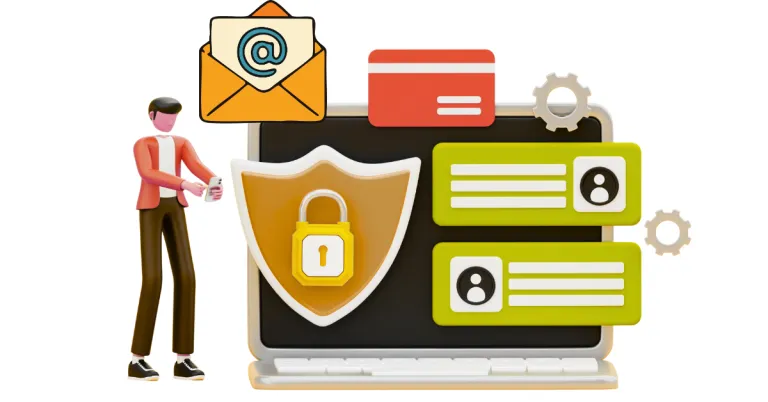
Free email services are businesses too, and their product is data. Your emails, your contacts, and your communication patterns all contribute to the profile they build about you.
For a business dealing with confidential client information, sensitive negotiations, or financial data, storing that communication on a free platform with broad data access rights is a real risk.
How to Make the Right Choice for Your Business
The right choice depends on what your business needs right now and where you’re headed.
If you’re just testing an idea and haven’t launched yet, a free email might get you through the first few weeks. But the moment you start communicating with real customers, sending proposals, issuing invoices, or building a reputation, you need business email hosting. Continuing to use free email past that point means every customer interaction is undermined by an address that signals you haven’t committed to your own business.
Here’s a simple way to decide.
If any of the following apply to you, it’s time to move to business email hosting:
- You have a website with your own domain.
- You communicate with customers or clients by email.
- You have more than one person on your team.
- You send invoices, proposals, or contracts.
- You want customers to take your business seriously.
If all five apply, there’s no good reason to stay on free email. The cost of business email hosting is small, and the cost of the credibility gap it creates is far higher.
Business Email Hosting by Truehost
At Truehost, we make it easy to get professional business email hosting set up alongside your website.
Here’s what we include:
Professional email with a custom domain.
We set you up with email addresses that match your website domain, [email protected], from day one. No generic addresses, no shared domains, just your brand in every inbox.
Secure and reliable email infrastructure.
We run our email hosting on professional servers with the authentication records, encryption, and security controls your business needs. Your data is protected, and your emails carry the trusted identity that gets them delivered.
Better inbox delivery performance.
With proper SPF, DKIM, and DMARC records configured from the start, your emails are far more likely to land in your customers’ inboxes rather than their spam folders. We handle the technical setup so you don’t have to.
Easy team email management.
Our admin tools let you create new accounts, manage storage, set permissions, and stay in control of your entire team’s email from one simple dashboard. As your team grows, adding new addresses takes minutes.
Free email services often use generic domains like Gmail or Yahoo, which reduces professionalism and brand trust from the moment a customer sees your address. They also come with weaker security, limited storage, and no admin controls.
Business email hosting through Truehost solves all of that in one place.
In Summary
The difference between business email hosting and free email comes down to one thing: control.
With business email, you control your domain, your data, your security, and your team’s accounts. With free email, the platform controls all of it.
For any business that wants to be taken seriously, communicate reliably, and protect its reputation, business email hosting isn’t an upgrade; it’s the foundation. At Truehost, we give you everything you need to get started. Set up your business email at Truehost.com →