 Domain RegistrationFind and register the perfect domain for your website.
 .COM DomainChoose a widely recognized domain to build global credibility.
 Domain TransferSeamless domain transfers with zero downtime and complete control.
 All TLDsFind and register your perfect domain. Choose from local and global extensions.
 SSL CertificatesKeep your website safe with reliable SSL Certificates that protect customer data and build trust.
 whoisCheck domain ownership details, expiration dates, and registrar information.
 US DomainRegister a .US domain and build trust in the USA.
 Web HostingEverything your website needs to run smoothly
 WordPress HostingWordPress hosting that just works
 Windows HostingReliable hosting for Windows environments
 Reseller HostingTurn hosting into your business
 Email HostingEmail that looks professional and works anywhere
 cPanel HostingFull control of your hosting with cPanel
 Affiliate ProgramJoin as a partner and earn commissions on every referral you send our way.
 Vps HostingScalable virtual servers that expand as you need.
 Dedicated ServersGet complete access and full control over your dedicated physical server.
 Managed vpsNot tech-savvy? We will take care of everything with our fully managed VPS hosting for you.
 AI Website BuilderCreate stunning websites in seconds with AI.
 Online ShopSet up a professional online store. No coding required.
 Web design serviceGet a tailored website designed to match your brand and support your goals.
 BlogFind helpful guides on web hosting, online selling, digital marketing, and more.
 Contact USYou can reach us anytime, day or night, through chat or email.
 SupportBrowse helpful guides and answers for all of our services.
Bad web hosting quietly kills small businesses every day. It slows your pages to a crawl, leaves your site exposed to hackers, and drives away customers before they ever see what you offer.
Let’s say you sign up for a plan because the price looks great, like $2.99/month, and then 12 months later, you get a renewal bill for $14.99/month and wonder where it all went wrong. Or your site loads fine on your laptop but takes 8 seconds on a phone, and you’ve been wondering why your bounce rate is through the roof.
These are hosting problems. And they’re entirely fixable if you pick the right web hosting provider from the start.
Think of web hosting like renting space in a storage unit. Your website’s files, images, text, and videos all live on a computer (called a server) owned by the hosting company. When someone types your web address into their browser, that server instantly sends your files to their screen.
This isn’t a list of random hosting providers thrown together. We researched real pricing, tested actual features, and compared renewal costs, the ones they hide in the fine print, so you don’t have to.
Here’s exactly what we’ll cover:
- The 5 best hosting providers for small businesses in 2026
- A side-by-side comparison table
Time to stop guessing and start building on solid ground. Dive in.
So what are these top 5 hosting providers to pick for your small business?
1) Truehost (Best Overall Value)
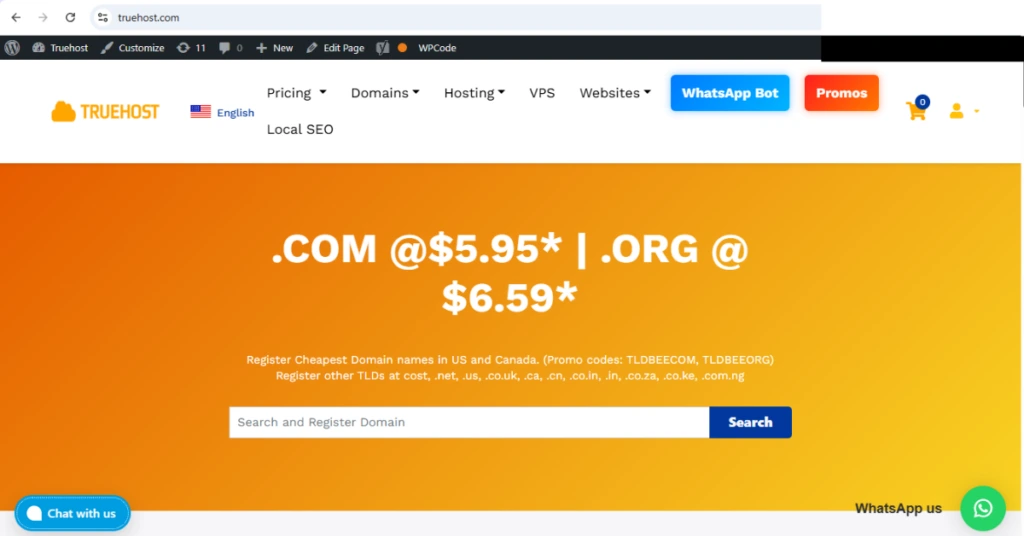
If you want the most features packed into the lowest price, Truehost wins. Period.
Truehost started in 2016 and has grown to serve over 3,000,000 clients across five continents. Their shared hosting plans start at just $1.50/month.
What you get at that price:
- Free SSL certificate
- Daily automated backups
- Unlimited email accounts
- One-click WordPress installer
- Free domain on selected plans
- 99.9% uptime guarantee
- 24/7 live chat and ticket support
- A free AI website builder
Truehost Cons:
- Some users report inconsistent live chat response times,
- Scalability to VPS is more limited
Truehost is Best for:
- First-time website owners
- Startups on a tight budget
- Small businesses that want maximum features
2) Hostinger (Best for Speed and Performance)
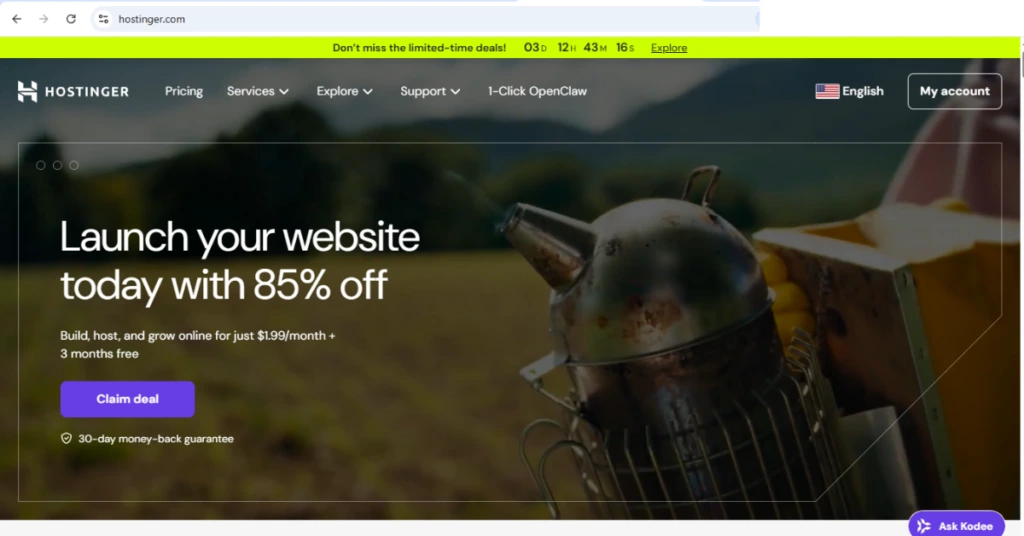
Hostinger is currently the second-largest WordPress host in the world. Their infrastructure is built around speed, LiteSpeed servers, NVMe SSDs, a global CDN, and object caching.
Hostinger’s hPanel dashboard is clean and beginner-friendly. They also offer a free AI website builder, a one-click WordPress installer, free SSL, and a free domain on annual plans.
Hostinger Cons:
- Daily backups are only included on Business plans and above.
- The cheaper plans use weekly backups.
- Their renewal rates also jump significantly after the intro period.
Hostinger is Best for:
Small businesses where site speed is a top priority, particularly ecommerce stores or booking sites, where load time directly affects conversions.
3) Bluehost (Best for WordPress Beginners)
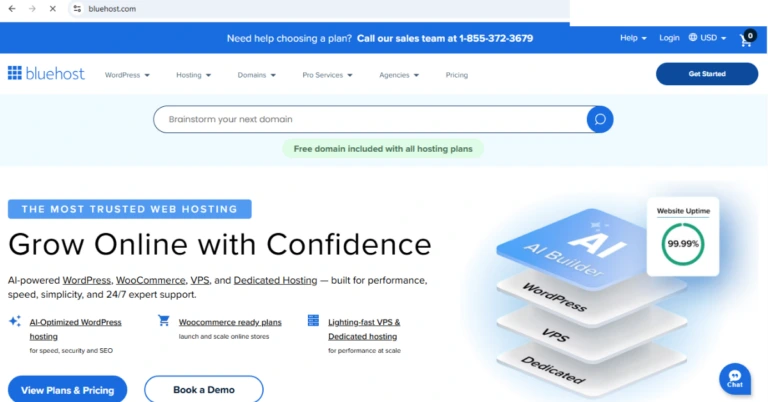
Bluehost has prominently featured on the official WordPress.org recommended hosting page. That endorsement carries weight. It means their infrastructure is specifically optimized for WordPress sites.
Bluehost’s intro prices are a bit expensive, and their renewal rates are among the steepest. A Starter plan that costs $3.99/month in year one jumps to $9.99/month at renewal. Always factor in the long-term cost.
Bluehost Cons:
- Renewal pricing is significantly higher than that of competitors.
- Some features, like CodeGuard daily backups and domain privacy, cost extra.
Bluehost Best for:
Business owners building their first WordPress site who want a reliable, officially recommended host with strong beginner support.
4) DreamHost (Best for Support and Security)
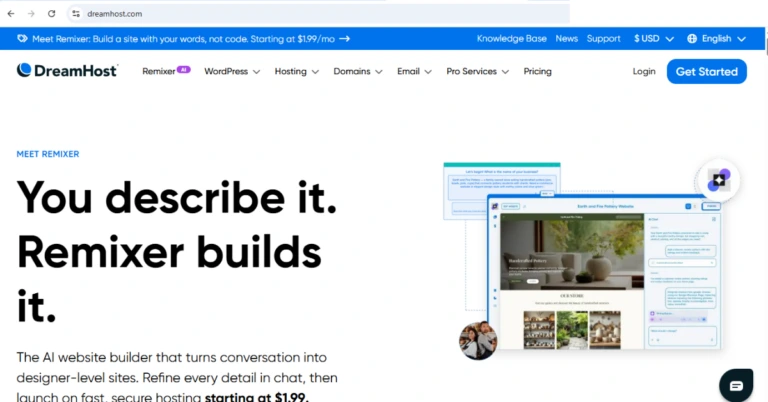
DreamHost has been around since 1997. It’s one of the oldest independent hosting companies still operating. They offer a 100% uptime guarantee (they’ll credit you if your site goes down), and their support team is entirely in-house, not outsourced.
They also offer a 97-day money-back guarantee. The longest refund window in the industry. If you’re unsure about committing, that safety net is significant.
DreamHost Cons:
- No phone support (live chat and email only).
- Basic shared plans don’t include email hosting/. It’s a paid add-on at $1.67/month per mailbox.
DreamHost is Best for:
US-based small businesses that prioritize security, reliable support, and fast domestic server performance.
5) HostGator (Best for Long-Term Growth)
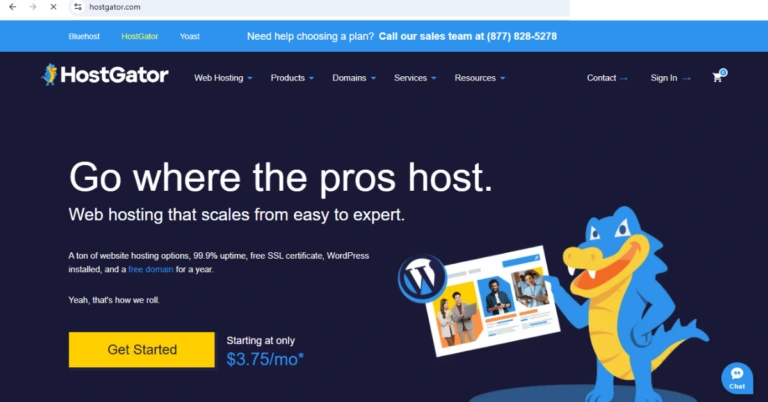
HostGator is built around scalability. You can start on a basic shared plan and smoothly upgrade to VPS, cloud hosting, or a dedicated server. All under one roof, without migrating your files.
Hostigator Cons:
- HostGator’s renewal pricing is among the highest on this list.
- Entry-level plans also use older SSD storage rather than the faster NVMe SSDs offered by Hostinger and Bluehost.
- Performance on basic plans can be inconsistent during traffic spikes, so if speed is your main concern today, one of the other providers may suit you better.
Hostigator is Best for:
Small businesses planning to grow significantly over the next 2–3 years who want a single provider they won’t outgrow.
Hosting Providers Side-by-Side Comparison
| Feature | Truehost | Hostinger | Bluehost | DreamHost | HostGator |
| Starting Price | ~$1.50/mo | $1.99/mo | $3.99/mo | $2.89/mo | $3.75/mo |
| Renewal Price | ~$3.99/mo | ~$7.99/mo | ~$9.99/mo | ~$10.99/mo | ~$10.99/mo |
| Free Domain | ✔ selected plans | ✔ annual plans | ✔ first year | ✔ annual plans | ✔ first year |
| Free SSL | ✔ | ✔ | ✔ | ✔ | ✔ |
| Daily Backups | ✔ included | ✘ paid/Business+ | ✘ paid add-on | ✘ weekly default | ✘ paid add-on |
| Unlimited Emails | ✔ | ✔ | ✔ | ✘ paid add-on | ✔ |
| WordPress Installer | ✔ | ✔ | ✔ | ✔ | ✔ |
| 24/7 Support | ✔(+ phone/chat/email) | ✔ | ✔(+ phone) | ✔ (chat/email) | ✔ (+ phone) |
| 99.9% Uptime Guarantee | ✔ | ✔ | ✔ | ✔ | (100% SLA) ✔ |
| VPS / Scalability | Limited | ✔ | ✔ | ✔ | ✔ |
| Best For | Value + features | Speed | WordPress | Support + security | Growth |
How We Chose These 5 Hosting Providers
Not every budget host is worth your money. We looked at four key factors:
Performance and uptime: Does the host guarantee at least 99.9% uptime? At 99.9% uptime, your site could still be down for over 8 hours a year. Anything below that is a red flag.
Pricing transparency: What’s the intro price, and what do you actually pay at renewal? Some hosts advertise $2/month and then charge $15 at renewal. We dug up both numbers.
Support quality: Is live chat available 24/7? Is it a real person or a bot? You need someone helpful when things go wrong at 2 a.m.
Scalability: Can you upgrade from shared hosting to VPS or dedicated servers when your traffic grows? Growth shouldn’t force you to start over.
These four filters left us with five standout hosts. One of them is significantly better than the rest for value.
Things to Watch Out for When Buying Hosting
Before you pull out your card, here are the traps that catch most first-time buyers:
The renewal rate bait-and-switch.
Every host on this list advertises intro pricing locked in for your first term (usually 1–3 years). After that, your plan renews at a higher regular rate.
Always check the renewal price before you sign up. It’s usually in small text below the plan. Bluehost and HostGator have the steepest jumps; Truehost has the most reasonable ones.
Backups that aren’t automatic.
If your host doesn’t run daily automated backups and something goes wrong, let’s say your site gets hacked, a plugin breaks, or someone deletes a page by accident, you could lose weeks of work. Truehost includes daily backups for free. Hostinger only includes them on Business plans and above. Bluehost and HostGator treat them as paid upgrades.
Email hosting gotchas.
DreamHost doesn’t include email accounts on its Shared Starter plan. You pay extra. Every other host on this list includes email. If you need [email protected] addresses from day one, factor that in.
Long-term lock-in.
The biggest discounts require 2–4 year commitments paid upfront. If you’re not ready to commit, a 12-month plan is safer.
In Summary
Choosing a web host isn’t about picking the cheapest option. It’s about picking the right one for where you are now… and where you want to go. All five providers on this list are solid. But if you’re a small business or a first-time site owner who wants the most value without paying for things you don’t need, Truehost delivers daily backups, unlimited email, free SSL, and WordPress support at a starting price most hosts can’t touch.
Don’t let a bad hosting decision quietly drain your sales, tank your Google ranking, or leave your site vulnerable to attacks. Make the right call from the start.
Ready to launch your site without overpaying? Start with Truehost today → hosting from $1.50/month, daily backups included, no surprises.